We’d love to hear a little bit of your background, where you grew up, how you got into agronomy, and where we are today.
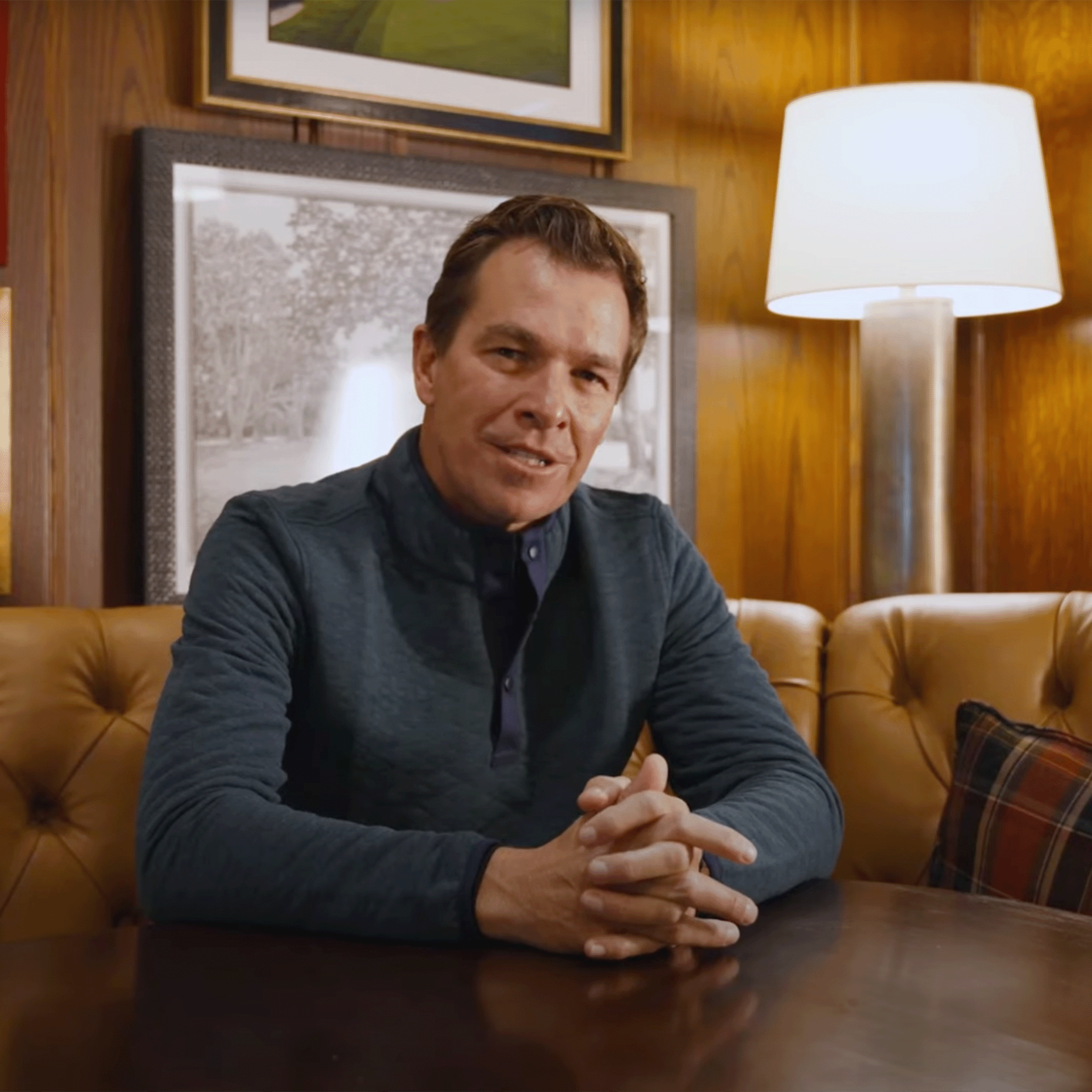
Yeah. My name is Scott Bordner. I’m the director of agronomy for the Union League of Philadelphia. I grew up in a small farming town out in the middle of Illinois and found my passion for turf management at a local golf course. From there, I went to school down at Horry-Georgetown Technical College in Myrtle beach and then took an assistant job up in Long Island. Moved on from there to Merion to help them host the US Amateur and the Walker Cup. Was fortunate enough to get a superintendent job outside of Philadelphia at Rivercrest Golf Club and then moved out to Chicago Golf Club a couple years later and was there for eight years before the Union League of Philadelphia called and said, we’re building this golf course down at the beach and took the opportunity to come play in the sand.
Did you have an a-ha moment, during school or earlier where you realized agronomy was your calling?
As a 16-year-old, I started on a grounds crew and we were just weed eating creek banks and raking bunkers and just helping out where we could. I just fell in love with it. The actual a-ha moment was in a college architecture class, and I was staring at a computer going, there is no way I could do this for eight hours a day, 40 hours a week. You start multiplying that times how many years you work. And I was fortunate enough to be working at a golf course at the same time and couldn’t wait to go to work. So that was my turning point—at a very young age, it hit me.

So, Chicago golf—that must have been quite the experience. Is that where you really cut your teeth and learned a lot? It must be one of the biggest budgets in agronomy.
Yeah, I mean, Merion Golf Club is where I really cut my teeth. I had an awesome mentor, Matt Schaffer, who trained a lot of superintendents. He really let us have free reign and you could make some mistakes. There was an entire group of us there at one time, there was probably 20 superintendents in a 10-year stretch. So that was where you really built your network and really honed the craft. From there I moved out to Chicago Golf Club. The two courses are so similar in their historical nature, but so different in their club nature. Chicago Golf Club is still very sleepy, very quiet, really hard to get a tee time. The membership all knows who you are—it’s such a close knit group. I had a lot of fun working out there and you know, it was one of those places that you’ll never forget being a part of.
Can we talk about your involvement here at Union League from day one until today and how that evolution?
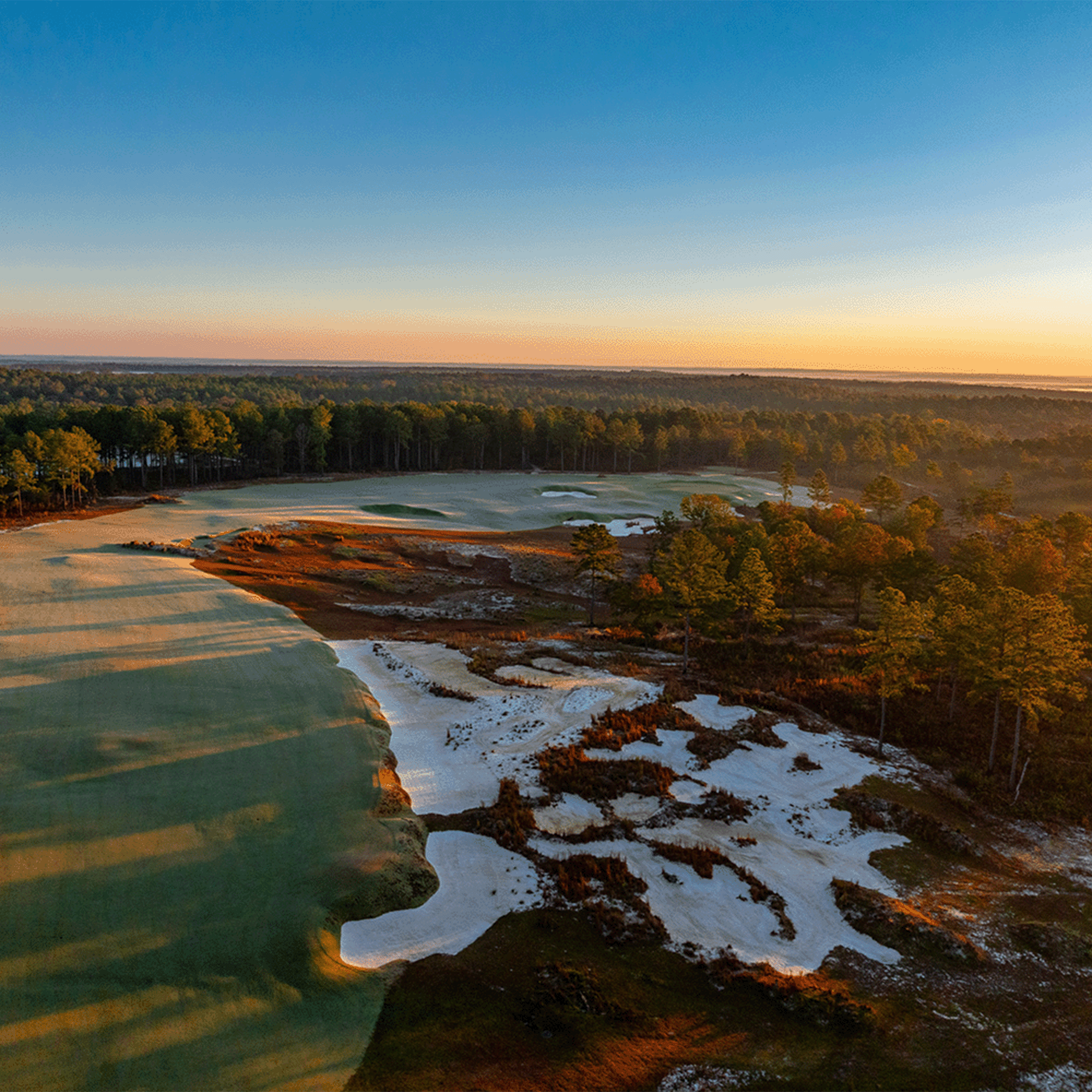
I’ve always been that guy who can’t sit still. So, when I was looking at Chicago Golf Club, we had a project coming and we had things to do, but it’s on a minimal scale. When we were done with that project, there wasn’t a lot to do except take care of the museum. So I looked at this as an opportunity to build your own house, if you will. And you know, the vision of Jeff McFadden at the top and then Sean Palmer right behind him, Jacob Hoffer. Those guys had a plan and really wanted to go aggressive with it. And you can see they let Dana Fry be really creative as what’s behind us. We moved almost 2 million cubic yards of sand to build this place. And it took almost four years, but they were willing to take the time to build it right.

Did you come in during the build?
I came in when they were a few holes into the build, but they were really starting just to move the mass amounts of earth to build what we call Mount Dana. Some of it was already done, but we did the bulk of the earth move once the team was in place.
Did you learn anything about agronomy in general during this build process?
I’ve always been the first person to tell you I’m not the smartest person in the room, but I do know the smartest people. So, I picked up the phone a lot and I brought in a very good team. We had assistance coming in from a guy that worked with me in Illinois, another young man from Illinois, another one from North Carolina. I mean, we had a squad brought in from day one. And then the key really was we brought Pat Haughey over from Merion. He had just helped rebuild the golf course at Merion. You bring in somebody who’s just done a project to see grass from the baby stages until it’s mature and ready to go, and then you build a team of energetic people around him. And it was a big success because of the people we were able to bring in with us to help.

Do you have a favorite hole or favorite part of the property that you just love?
The most interesting holes to me are back in the corner on Three, Four, and Five Sherman. You really have to think about how you play those holes. It has nothing to do with how far you hit the ball. It’s the strategy of those holes that make them fun. Then I would say Three Grant is one of my favorite holes just because I’m a cynical human being. It’s a par three that plays like a par five if you miss that tee shot.
For the maintenance on a course like this in South Jersey, how does it differ from Chicago in the Midwest?
I mean, I went totally reverse. I was at a club with the smallest membership: 125 members to almost 4,000 Union League members. We were on farm soil and now we’re on sand. So yeah, the maintenance is totally different, and that’s why I’m grateful to have the team still in place of Pat Haughey leading the charge and running the staff every day and making sure that we’re growing grass on sand. You’ve got to keep it as firm as possible, but also keep it alive.

So how does growing grass on sand actually work?
The trick to keeping it as good as we do is having a lot of people. You know, we have six o’ clock in the morning tee times. So we’ll have six people on hoses at 4:30 in the morning, going out ahead of them, making sure every inch is checked and good to go for that first wave of people.
You’re Director of Agronomy for all courses, right?
Yeah. I mean, we’re fortunate enough to have a big staff across all three properties and talented people at all levels. And I think that’s attributed to the amount of effort we do put into making sure they’re ready for the next level. We host our own Union League University, is what we call it. And we’ll have teams from different golf courses come in, as well as all of our team members, our mechanics, our assistant superintendents, our horticulturists, irrigation techs, every level. And we try to give leadership advice and classes as well as each individual section.
One of the keys that nobody really pays attention to is what I call the offensive lineman of our staff. The mechanics, the irrigation techs, the technical guys, they’re the dirtiest people. You never notice them unless they do something wrong. And you’ll notice that one little stripe down the fairway or, you know, an irrigation blow-up somewhere. So the people behind the scenes really make this place happen as well.

Would you give us a little background on your involvement in the Super-Scratch Foundation?
The Super-Scratch Foundation was started by a group of members at Huntington Valley who wanted an amateur event to come to their golf course. They asked themselves why are all these events Pro-Ams? Why are there no superintendent-amateur events? So they got some great golfers and some hack superintendents to all join together. And as they were talking to the superintendents, they were talking about what the biggest need in our industry is, and they said, young people just aren’t going into trades in general, and we’re one of those trades that gets hit. So they decided to take the leftover funds from each of them chipping in and give a $1,500 scholarship. And I played in it, probably year three, because we were busy with construction the first two years. We had a great time, came back to the office and the superintendent here, Pat Haughey, was sitting in the office saying, why do the assistants always come to me with problems? Why don’t they come with solutions? I just want people to come with solutions. And I’m sitting there just having played in this event that seems like a viable solution to help kids get into our business. And every superintendent event you go to and everyone you talk to, people always complain that kids aren’t getting in. But this was the first real thing that I saw that was actually solving the problem. And it was a solution that I thought we could run with. So last year we officially made it nationwide. We had a qualifier out at PGA West and we raised almost $200,000 to give back which positively affected almos 40 students. This year we’re well above that threshold and looking to grow it across the country even more.
It gives scholarships back to turfgrass students, right?
Yeah, I mean, there’s a lot of foundations at different clubs and a lot of scholarships that are given out. This is the first one to be solely based on the agronomy side. It’s the kids that are out there working hard, getting the golf course ready that you don’t see. Again, back to the offensive lineman thing: You won’t notice that they were there unless they did something wrong. And how can we help elevate those young people and get them into the profession that we’re all blessed to be a part of? I mean, five, ten years down the line, is there going to be enough assistants to fill all the superintendent voids? That’s the crunch we’re in. Right now, it affects superintendents not being able to find people. In five years, it’s going to affect the membership more.
Holderness & Bourne has been a great partner for the Super-Scratch Foundation. They jumped in right from the get-go. They came to us and said, listen, this is what we’re all about, being green grass and helping you grow from the ground up. They gave us shirts, and we sell merchandise on our website that they’re generous to help us get out there. It’s a cool logo with a cup cutter and people love that. And they love the Holderness & Bourne brand. The combination just fits perfectly.