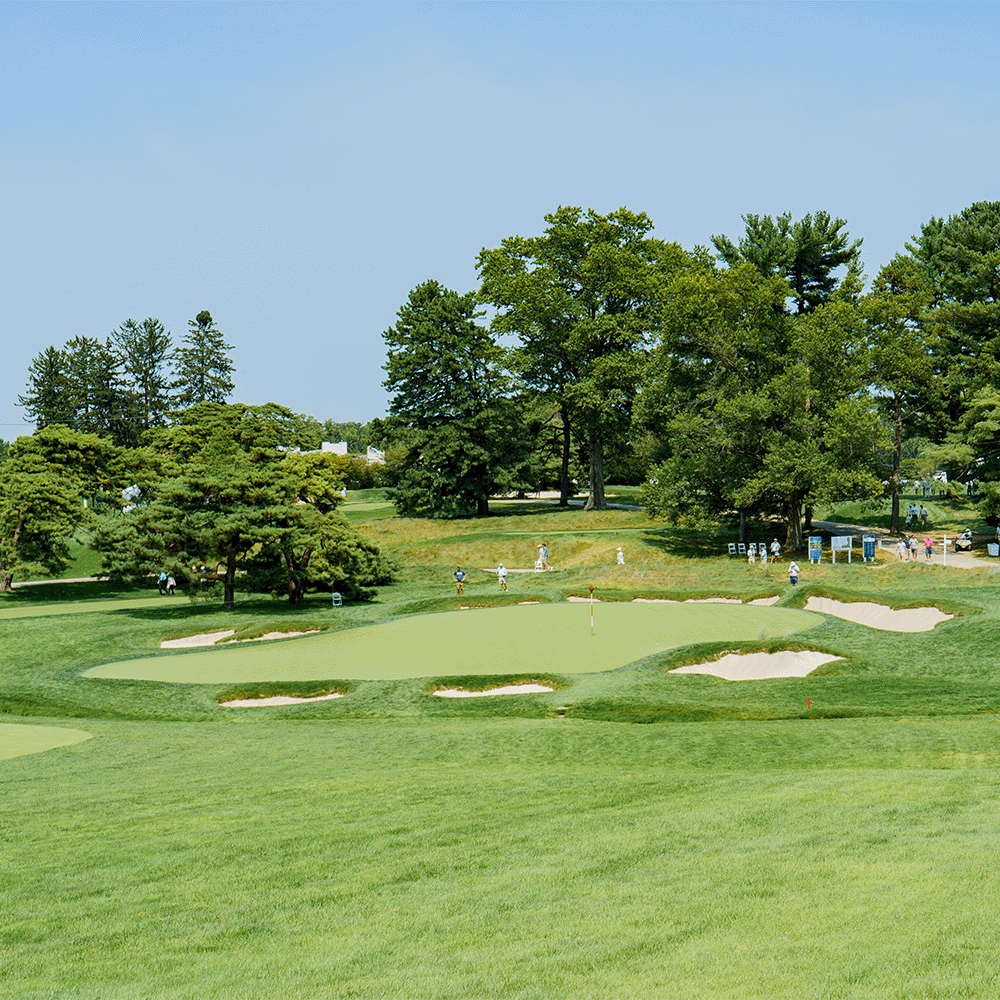
The U.S. Amateur Golf Championship is more than just a golf tournament. Despite lacking the media coverage of the majors, this is where the legends of the sport were made, even before they turned pro. The U.S. Amateur Championship offers pure, uninterrupted coverage thanks to Rolex, offering golf at the highest amateur level.
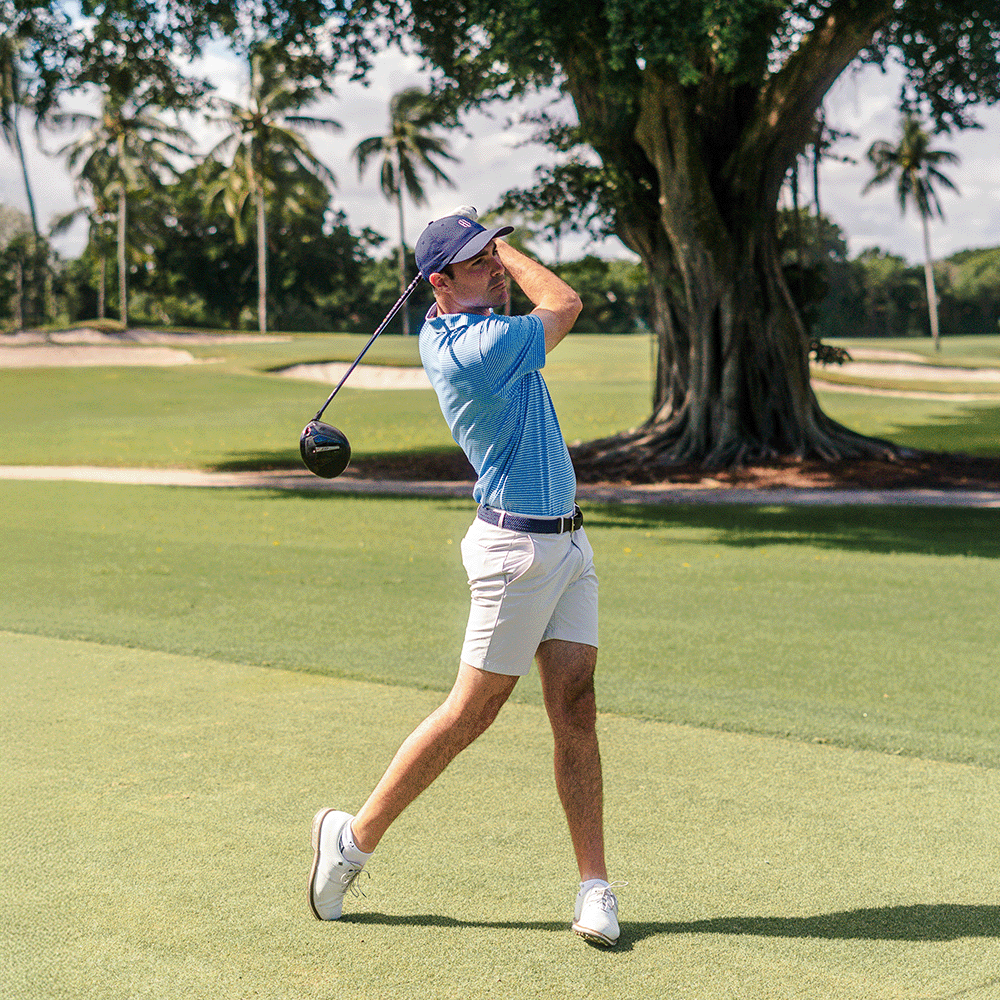
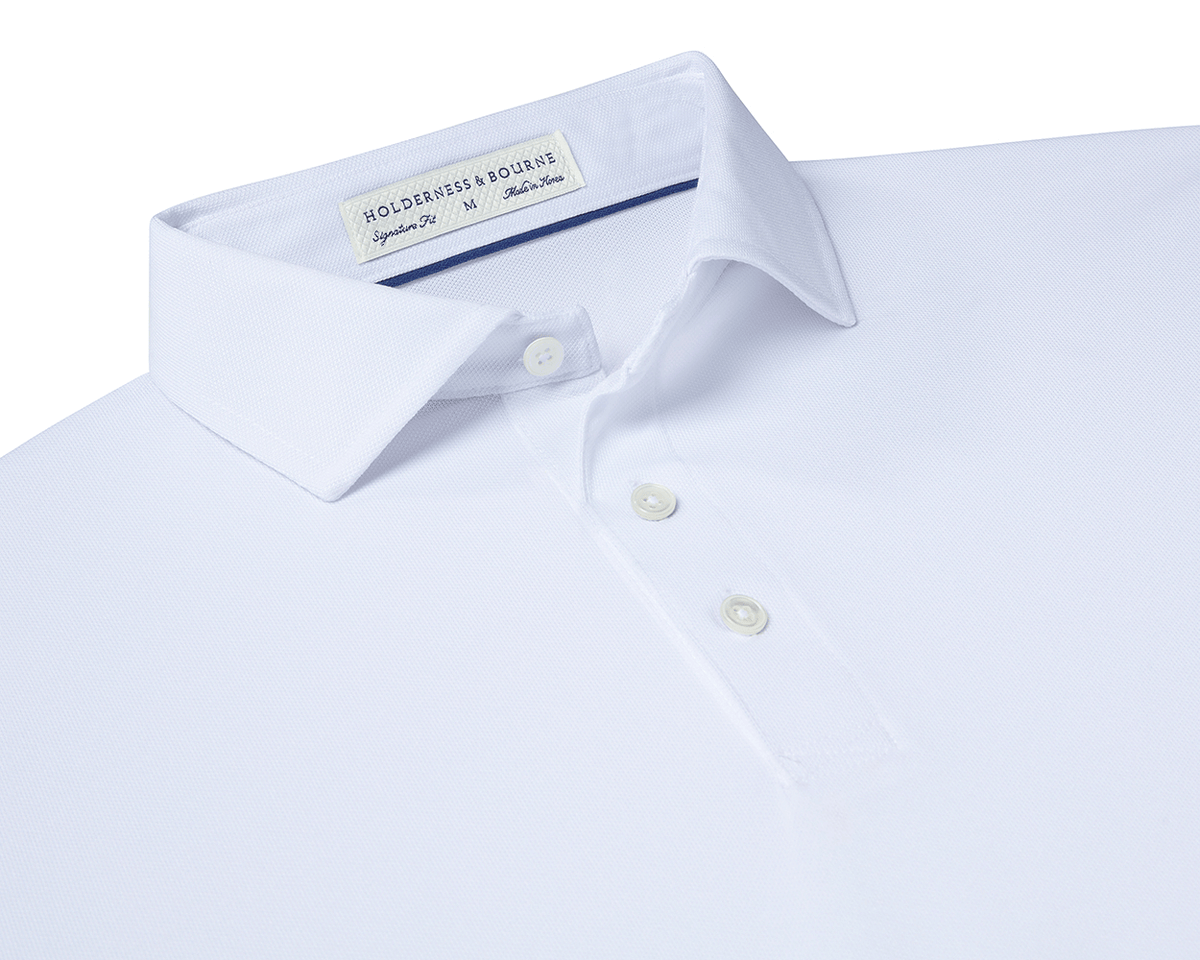
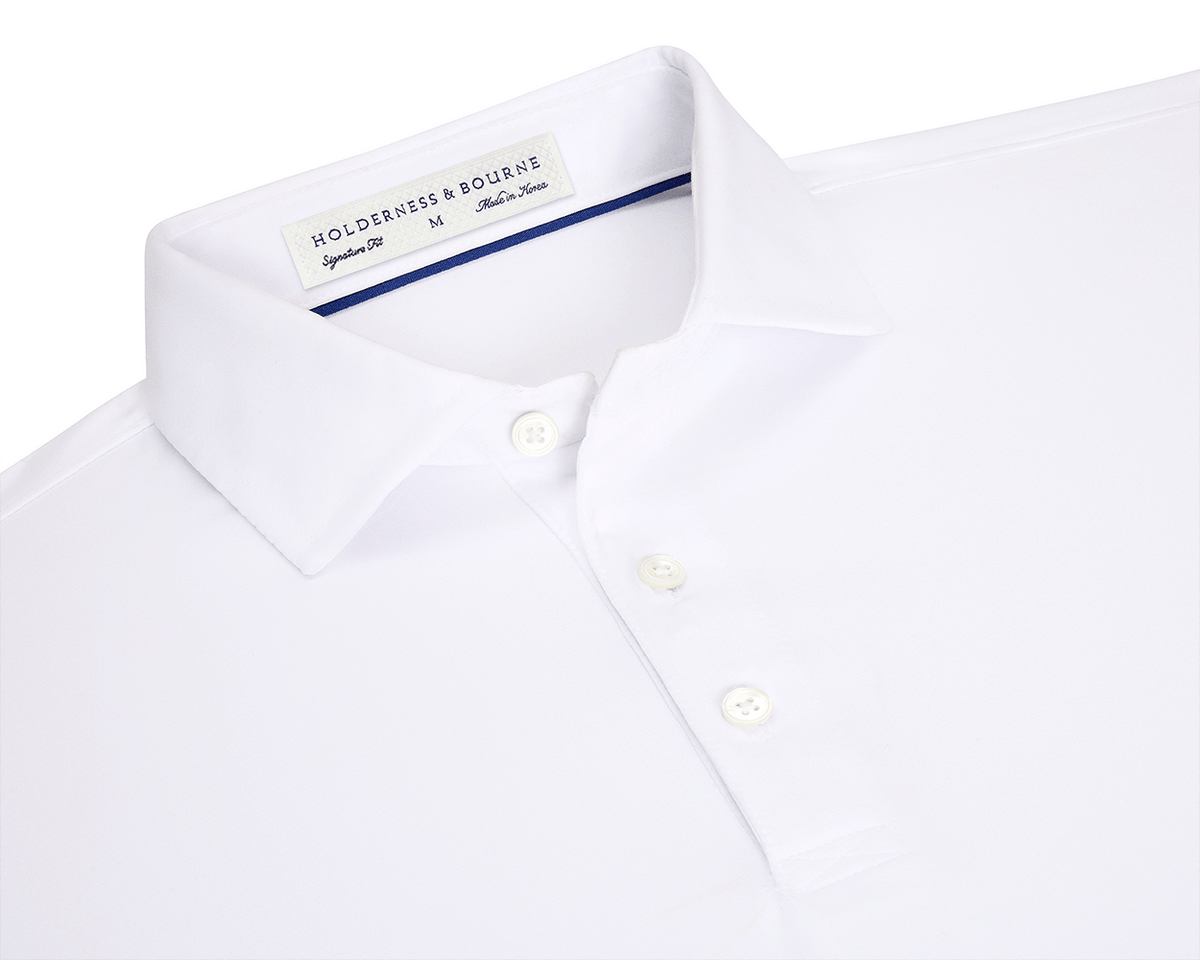
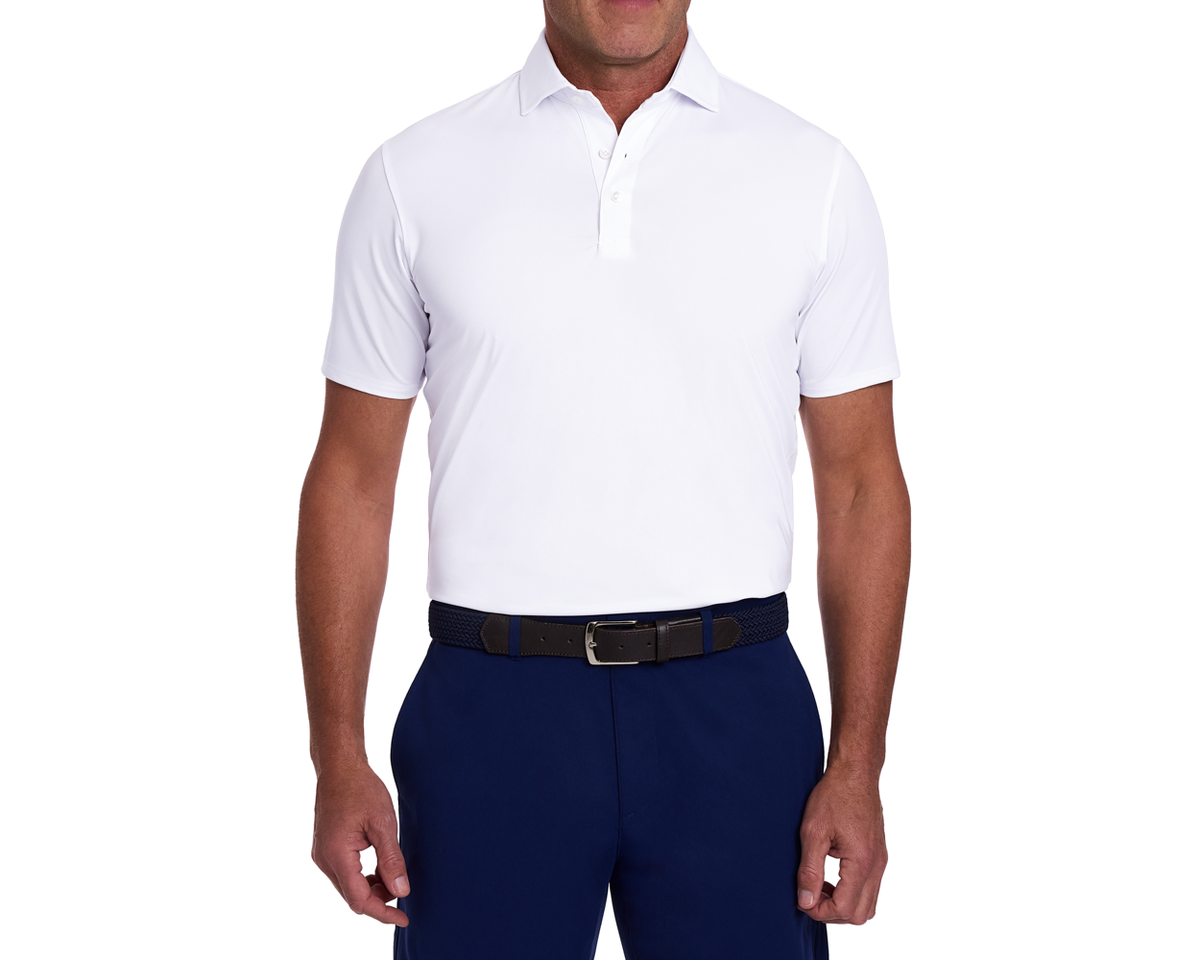
At Holderness & Bourne, we’ve worked to build a golf clothing brand for the serious golfer who appreciates the craft of the game. Exactly the kind of player who understands the significance of the U.S. Amateur. The 2025 champion, Mason Howell, was sporting H&B when he lifted the Havemeyer Trophy. This year, we had 12 players wearing the brand at Merion and Philadelphia Country Club.


What Is the U.S. Amateur Championship?
Played every August since 1895, the premier USGA amateur event is one of America’s longest-running golf championships. The championship consists of two stroke play rounds followed by a cut to 64 players, and then match play from that point onward, resulting in a 36-hole final.
The U.S. Am is anything but a recreational event. Players must maintain a USGA Handicap Index of 0.4 or lower, and there’s a lot riding on the championship. The winner receives automatic invitations to the following year’s Masters, Open Championship, and the U.S. Open, along with the Tiger Woods Medal. The runner-up earns exemptions into the Masters and U.S. Open, making the USGA Amateur Championship the only amateur event in which coming in second still gets you a ride to Augusta.

A Brief History: From Newport to Merion
The first U.S. Amateur was played at Newport Country club the same week as the first U.S. Open in 1885. Charles Blair Macdonald won that inaugural U.S. Am, and the USGA was born.
For the first few decades, the U.S. Amateur was considered a major championship on the level of any professional title, including the Open; in those days, the best golfers in America were amateurs. As the sport grew from small fields of club members in the late 19th century through the national media attention of Bobby Jones’s heyday in the Roaring ’20s, the U.S. Amateur evolved to become a launching pad for today’s professional game. These days, the U.S. Amateur Championship is also the primary feeder into the national amateur team, which competes every other year for the Walker Cup against Great Britain & Ireland.

Of course, Merion has been here before: Jones won the 1930 U.S. Amateur on the East Course on the final leg of his Grand Slam. The course carries that notoriety into every championship it hosts.
The Legends Who Won It
The roll call of U.S. Amateur champions is an unquestionable who’s who of golf, featuring household names like Bobby, Tiger, and everyone in between.
Bobby Jones: The Standard
Jones won the U.S. Amateur a total of five times (1924, 1925, 1927, 1928, and 1930). No golfer has won it more. His 1930 victory at Merion wrapped up the Grand Slam—with wins in the U.S. Amateur, British Amateur, U.S. Open, and The Open, all in a single year—an accomplishment that has never been repeated. Jones never went pro. The U.S. Amateur was his stage, and he owned it.
Jack Nicklaus: The Golden Bear’s Amateur Years
Before turning pro, Nicklaus won back-to-back U.S. Amateurs in 1959 and 1961. The Broadmoor in Colorado Springs hosted his win in ’59, when Jack was just 19 years old. He went on to win 18 major championships as a pro, but said it was the Amateur that taught him how to compete, not just how to play.
Tiger Woods: Three Straight, Never Done Before or Since
Woods came out of the gate strong, winning the U.S. Amateur in 1994—at 18 years old, he was the youngest champion in history up to that point. He is the only player ever to win three consecutive U.S. Amateur championships, chalking up wins in ’94, ’95, and ’96. In the ’96 championship, he scored 18 consecutive match-play wins across his three titles (a record that stands to this day), and announcing his intent to turn pro immediately thereafter.
The USGA formalized Tiger’s remarkable legacy this year: The U.S. Am champion now receives the Tiger Woods Medal along with the Havemeyer Trophy.
Other Champions Who Went on to Define the Game
The list of U.S. Amateur champions reads like a who’s who of modern golf. Arnold Palmer (1954), Phil Mickelson (1990), Matt Fitzpatrick (2013), Viktor Hovland (2019). And in a moment that made golf a mainstream sport in America, Francis Ouimet won the U.S. Amateur at Ekwanok in Vermont in 1914, which came just a year after his breakthrough 1913 U.S. Open upset in Brookline, MA, marking the first amateur win in that tournament.
Why Match Play is Different
Match play is scored hole by hole, as opposed to stroke play—that is, most golf—which only considers the total score in determining the winner. In match play, if you win a hole, you go 1-up. Lose a hole, and you go 1-down. This way, a missed putt early in the round doesn’t haunt you to the end.
The result is a game that rewards a different strategy than stroke play. Momentum comes into the picture—you can be 3-down with 4 to play and still win.
The 36-hole final is a test of endurance, with morning and afternoon rounds on the same day. Amateur golf at this level requires fitness, focus, and strategy that 18-hole match play doesn’t. From comebacks to missed tap-ins to concessions, some of the most dramatic moments in golf history have come from U.S. Amateur match play.
Merion Golf Club: Where History Lives
Designed in 1912 by Hugh Wilson, the East Course at Merion, known for its wicker-basket flagsticks; narrow, tree-lined fairways; and elevation changes, is one of the world’s shortest major championship venues—and one of the most demanding. The course has hosted five U.S. Opens and multiple U.S. Amateurs, including Bobby Jones’s legendary 1930 Grand Slam clincher.

The 2026 U.S. Am marks the return to a course that rewards precision over power, which is exactly the kind of golf for which the U.S. Amateur was created.
What It Takes to Win: The Amateur Game at Its Peak
The field at the U.S. Amateur is elite before it even tees off: Golfers must qualify by holding a USGA Handicap Index of 0.4 or lower. Two days of stroke play thins the ranks before the bracket begins, leaving the best amateur golfers in the sport to complete six rounds of match play, including the 36-hole final round. The championship requires peak focus, course management—U.S. Amateur champions invariably play the course, not their opponents—and competitive resilience, all sustained over the course of an entire week.

Why the U.S. Amateur Still Matters
While the pro golf tours reach to younger players each season to maintain interest, the U.S. Amateur remains the pinnacle of amateur excellence. After all, winning the U.S. Am doesn’t just earn exemptions, it earns a place in golf’s pantheon with the likes of Jones, Nicklaus, and Woods. That’s some rarefied air.
For golf fans, it’s a week of pure competition. It’s golf without appearance fees, FedEx points, or giant checks—just a trophy, a medal, and a place in the annals of the game.
We cheer the spirit of the U.S. Amateur Championship. At Holderness & Bourne, we get it. We build refined clothing and accessories designed for serious play, not for trend cycles. It’s the same commitment to craft that the U.S. Amateur demands of its players.
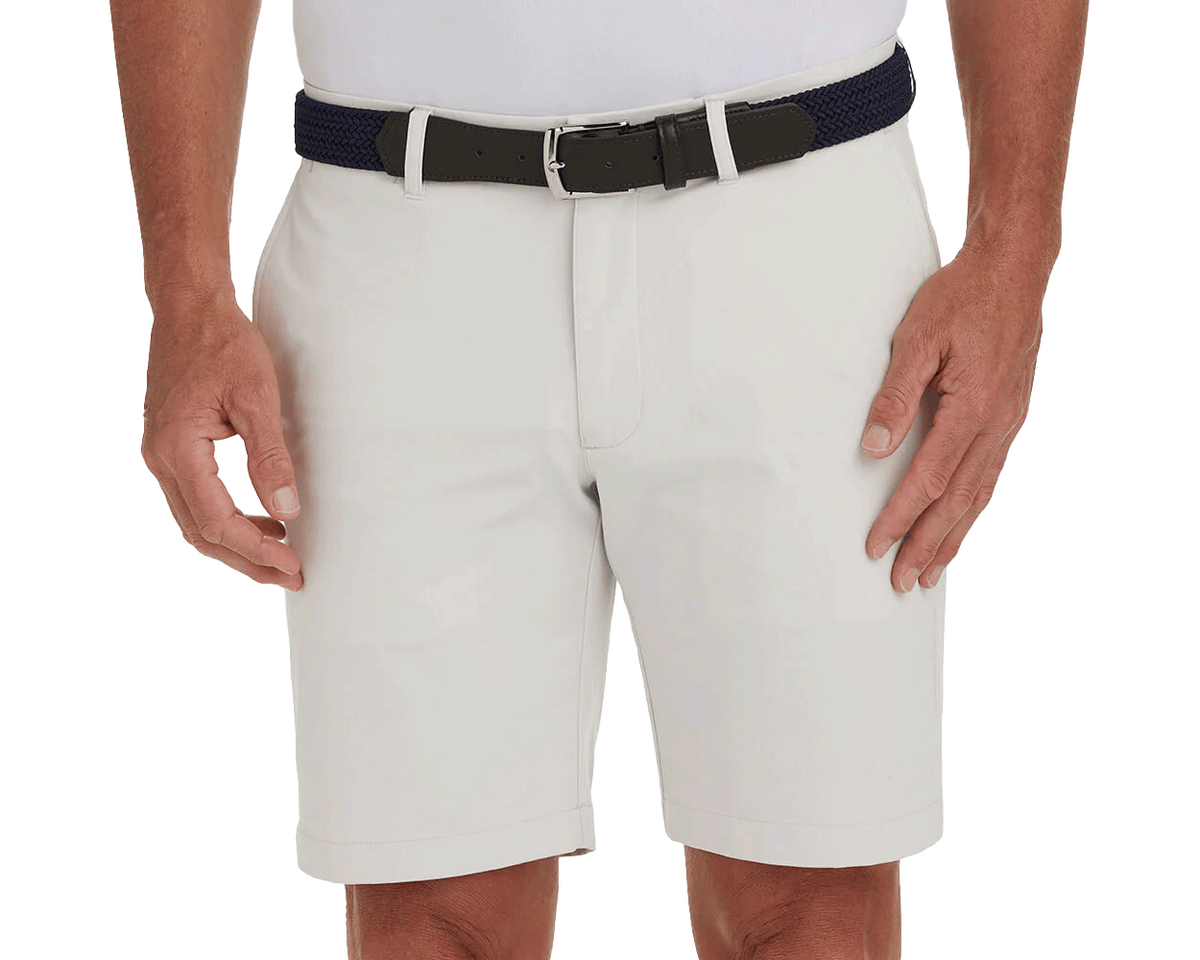
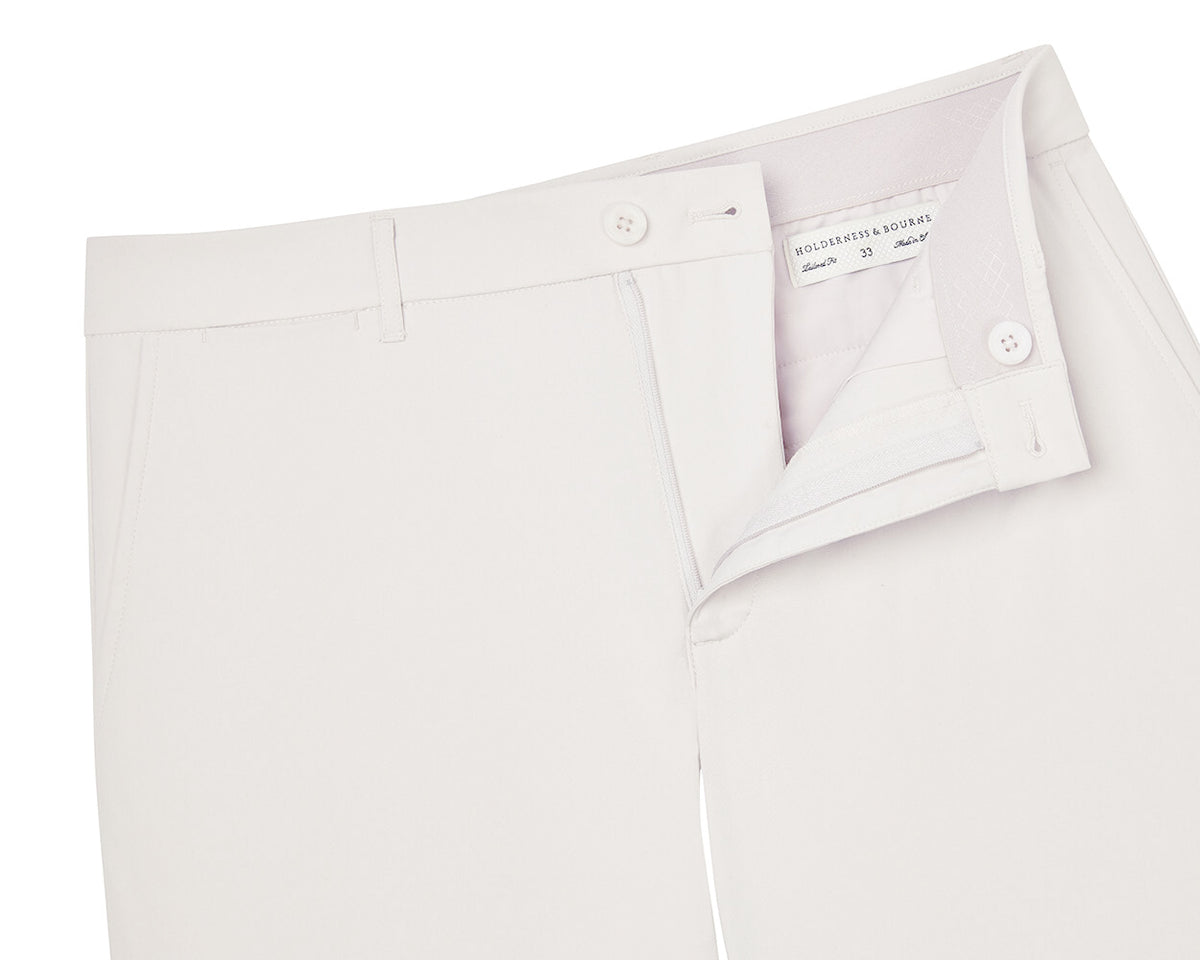
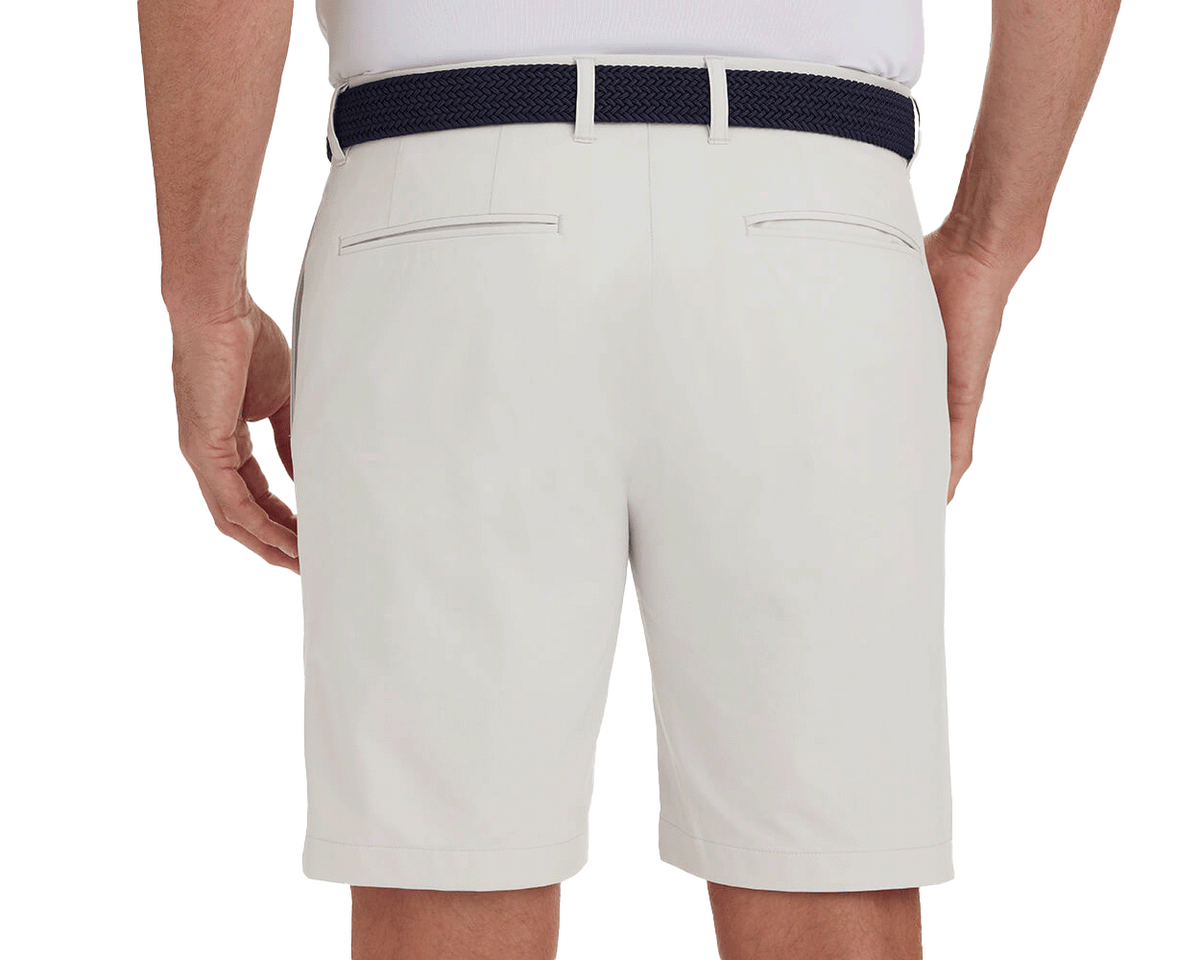
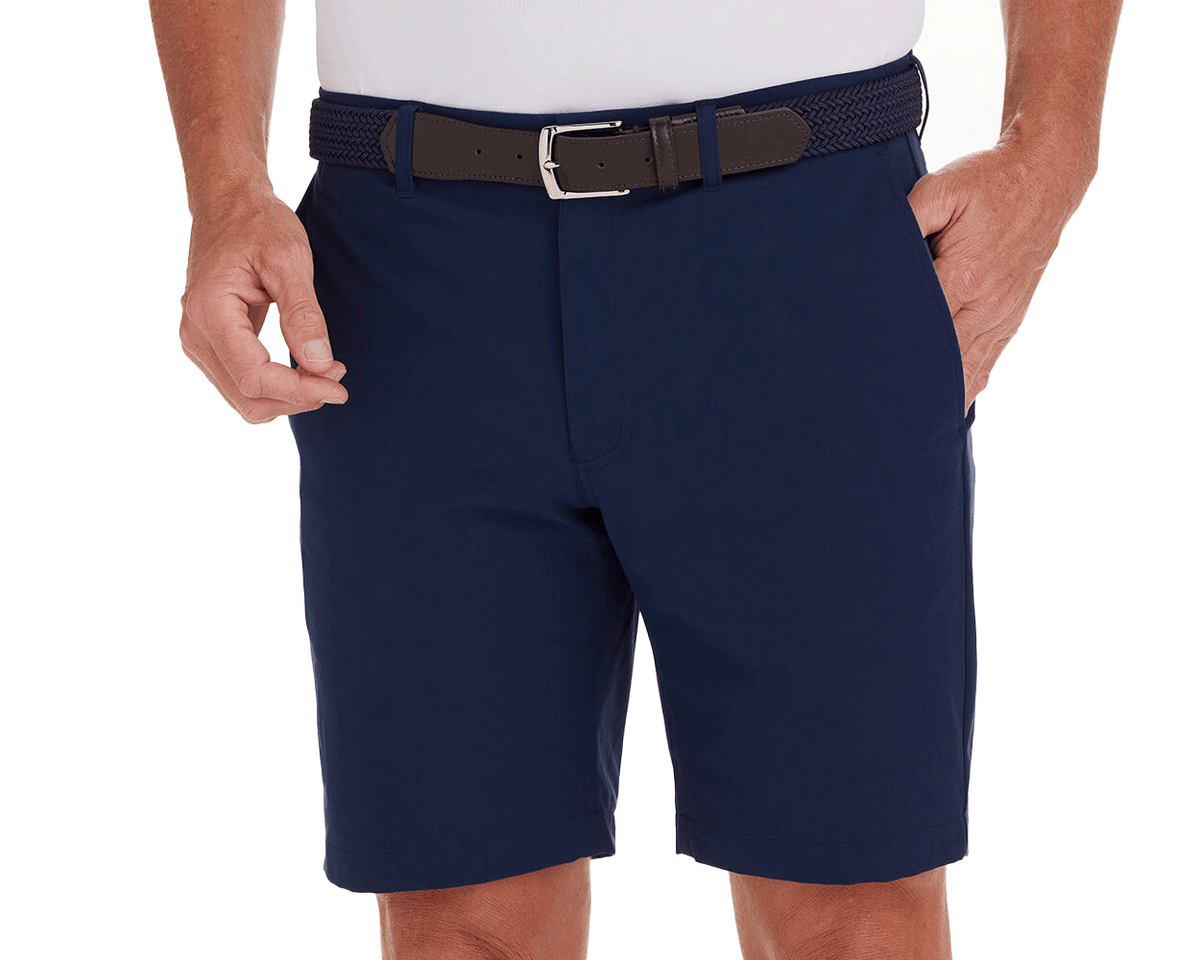
Shop our new collection of performance polos, layers, shorts, pants, and more—all built for the passion of golf.